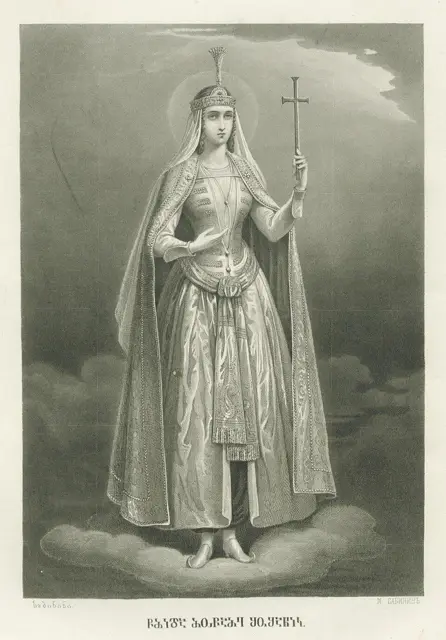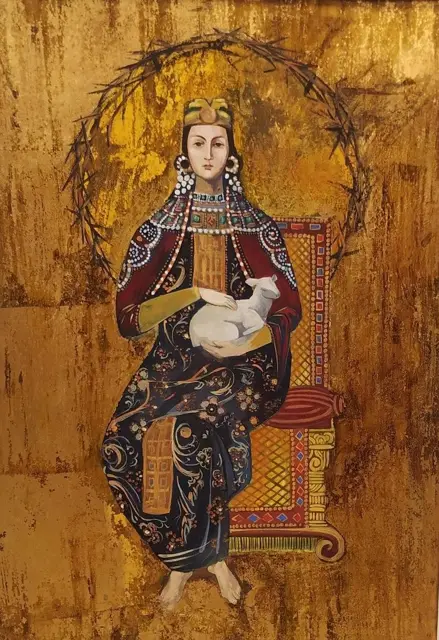
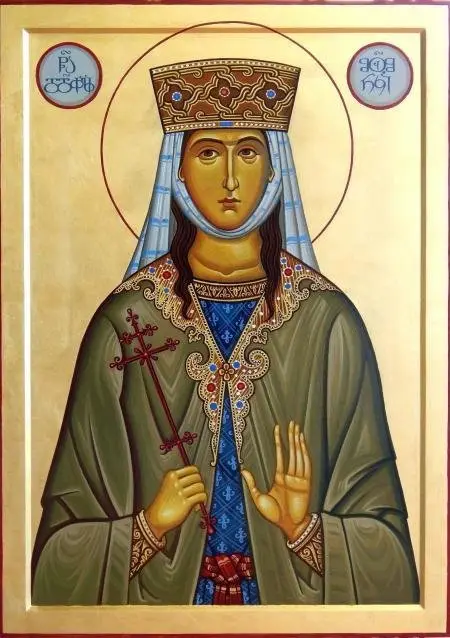
Saint Shushanik
For six years the chains weighed down her body, but they could not subdue her soul. Shushanik was robbed of her freedom, of the peace of her home and at last of her life, yet she could not be forced to deny Christ. The prison became for her a place of prayer, and the torment a spiritual victory. Centuries have passed, but her steadfastness still reminds us that the body may be enslaved, but never the soul.
- Feast
- 28 August (10 September)
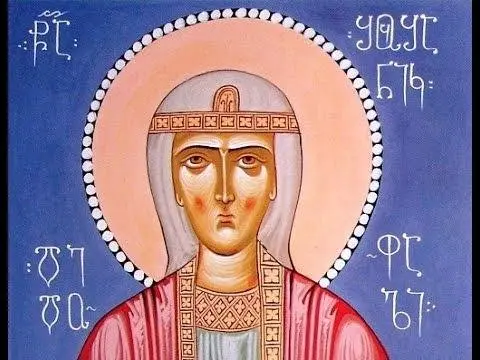
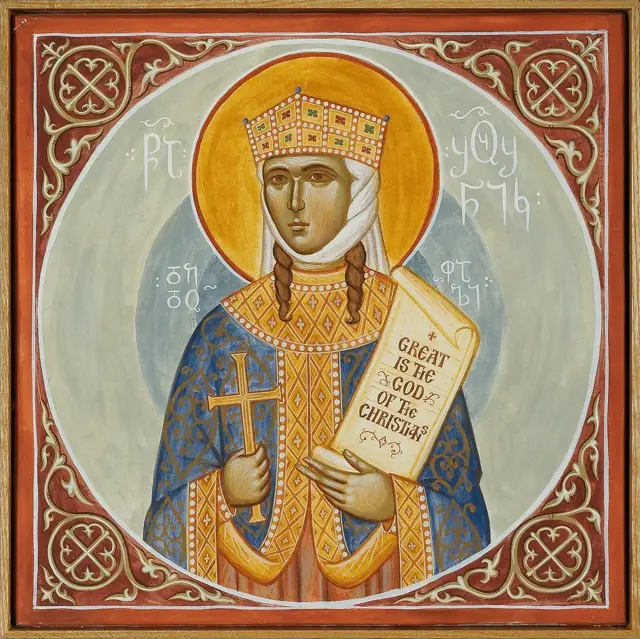
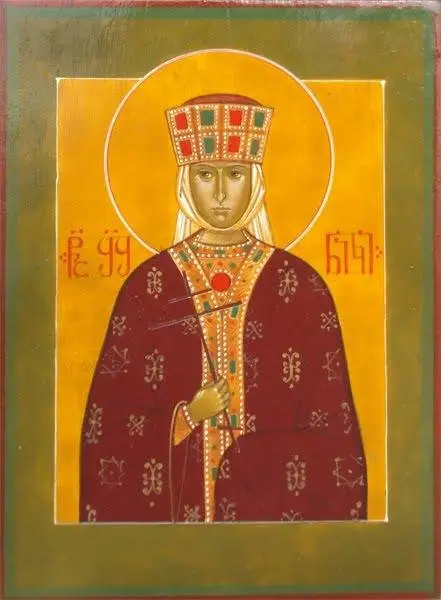
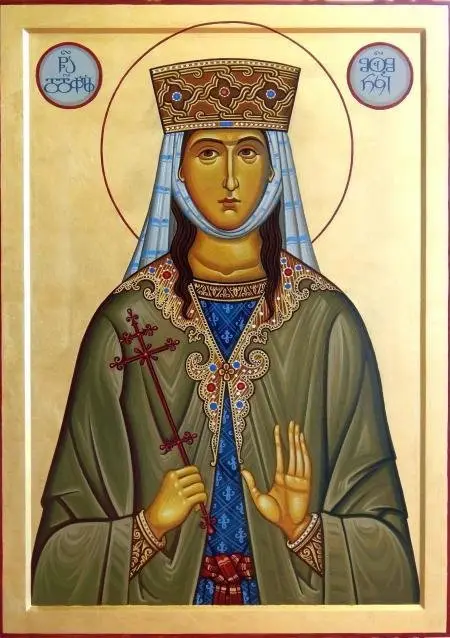
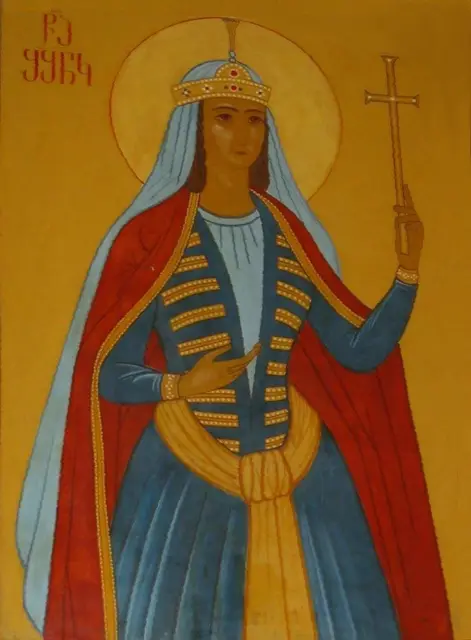
Saint Shushanik, one of the earliest and most outstanding martyrs of the Church of Georgia, is a glorious example of unshakeable faithfulness to Christ, spiritual firmness and self-sacrifice. She lived in the 5th century, in that difficult age when Kartli was under the strong political and religious pressure of Sasanian Persia. At that time the defence of the Christian faith often meant not only spiritual but also political resistance. Shushanik chose torment, imprisonment and in the end death rather than deny Christ, and for this her name has been kept through the centuries with special honour in the Christian memory of Georgia.
Saint Shushanik, whose name is also found as Vardeni or Vardanush, was born in the first half of the 5th century. She was the daughter of the renowned Armenian commander and defender of the Christian faith, Vardan Mamikonian. Her father opposed the Sasanian authorities' spreading of Zoroastrianism among the Armenians and the other Christian peoples of the Caucasus, and fell in 451 at the battle of Avarayr.
Vardan Mamikonian became in the Christian East a defender of the faith, and Shushanik, brought up in such a family, took Christian teaching to heart from childhood. For her faith was not merely a family tradition: later, when she found herself before the hardest trial of her life, it was this faithfulness to Christ that became the ground of her decisions.
Shushanik was given in marriage to one of the influential nobles of Kartli, the pitiakhsh Varsken. They lived in Tsurtavi and had four children. Varsken was a man of considerable political power and had close ties with Sasanian Persia.
At first Varsken was a Christian, but later, to strengthen his political position, he visited Shah Peroz I of Persia. There he renounced Christianity and accepted Mazdaism, that is, Zoroastrianism. This decision had more than a personal religious meaning. Varsken drew closer to the Persian authorities and also promised that, on returning home, he would bring his own family over to the new faith.
When Shushanik learned of her husband's apostasy, it was for her no mere disagreement between spouses. She saw Varsken's conduct as a betrayal of Christ. Shushanik left the palace, took refuge with her children in the church and gave herself to prayer before God.
After Varsken's return heavy pressure on Shushanik began. Her husband demanded that she come back to the palace, accept his decision and submit to the new faith. Shushanik firmly refused every such demand and declared that she would never betray Christ.
Her firmness roused Varsken's fury. Shushanik was brought back to the palace by force, cruelly beaten and insulted. Later heavy fetters were put on her and she was cast into prison. The writer of her Life conveys with special intensity the physical pain, humiliation and captivity which the saint endured.
A direct witness of these events was her confessor, the priest Iakob, known as Iakob of Tsurtavi. It was he who preserved for us the account of Shushanik's martyrdom and the spiritual portrait of her person. For this reason the Life of Saint Shushanik does not rest only on a later tradition: the most important part of her story was written down by a man directly connected with the events.
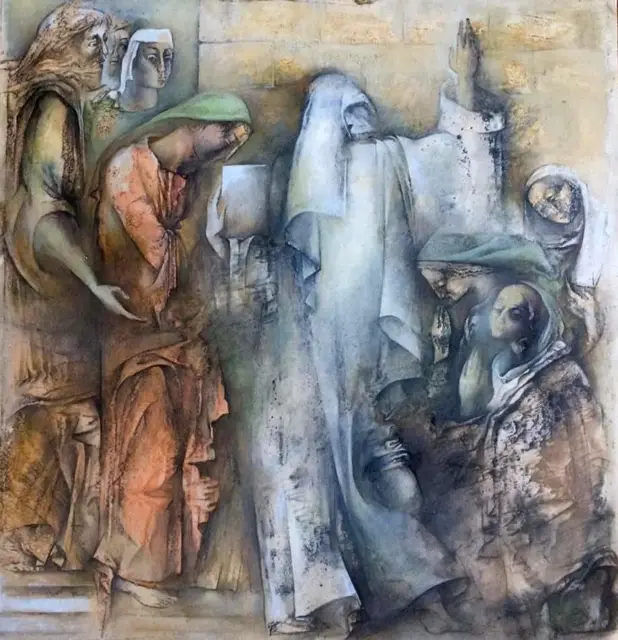
Saint Shushanik spent about six years in prison. These years were not for her only a time of suffering. Despite the harsh conditions, she prayed, fasted and kept her gratitude to God. Little by little her prison became a place like a spiritual centre.
Clergy, the faithful, the sick and people seeking counsel and comfort came to her. Shushanik encouraged them, blessed them and called them to faithfulness to Christ. In Church tradition healings and other miraculous events are also linked with her prayer.
One of the heaviest trials for her was the fate of her own children. Varsken tried to bring the children too over to the Persian faith and in this way to put still greater pressure on Shushanik. For a mother, to see her own children separated from the faith was a special pain.
Even so, Shushanik could not allow a mother's pain to overcome her faithfulness to Christ. This became one of the hardest and at the same time most significant sides of her martyrdom: she suffered persecution not only in her own body, but also in the form of a family tragedy.
During her imprisonment her health gradually declined. Heavy fetters, beatings, cold, bad conditions and many years of suffering weakened her body, but her spiritual firmness was not shaken.
As death drew near, clergy and her faithful followers gathered around Shushanik. She blessed them, called them to faithfulness to Christ and commended her soul to God. About the year 475, in Tsurtavi, Saint Shushanik ended her earthly life as a martyr.
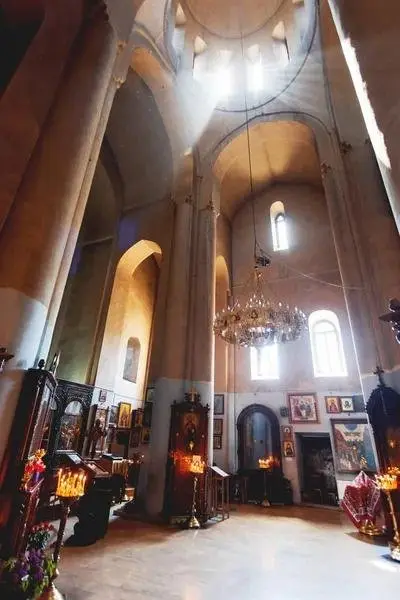
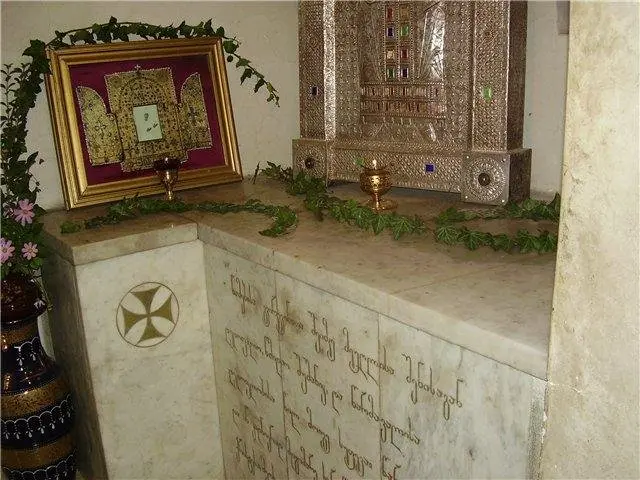
At first she was buried in Tsurtavi. Later, when historical circumstances changed, her holy relics were translated to Tbilisi. Georgian Church tradition links the holy relics of Shushanik especially with the Metekhi Church of the Nativity of the Mother of God, where her memory was kept with special honour for centuries.
The life of Saint Shushanik has yet another, quite special significance for the culture of Georgia. Her confessor and a direct witness of the events, Iakob of Tsurtavi, described her martyrdom in the work “The Martyrdom of the Holy Queen Shushanik”, known as “The Martyrdom of Shushanik”.
This work is regarded as the oldest original Georgian literary composition to have come down to us, and stands at the beginning of the history of Georgian literature. It is not only a saint's hagiography: the text gives unique information about the political, ecclesiastical, social and family life of 5th-century Kartli.
The special power of “The Martyrdom of Shushanik” also lies in the fact that in the text the saint appears as a living person. She feels pain, family tragedy, grief for her children and physical suffering, yet in spite of it all she does not change her decision. That is why her story keeps a special emotional force almost sixteen centuries later.
The martyrdom of Shushanik also shows clearly the great conflict of that age. On one side stood Sasanian political power and the attempt to spread Zoroastrianism; on the other, the desire of the Christian peoples of the Caucasus to keep their own faith and spiritual identity.
In this sense Shushanik's struggle was not merely a family conflict. Her refusal to accept Varsken's religious choice became an act of Christian freedom and of defence of the faith. She had no army, no political power and no means of changing the situation by force. Her only weapons were faith, prayer and the resolve not to betray Christ.
The Georgian Orthodox Church celebrates the memory of Saint Shushanik on 28 August (10 September), according to the old and the new calendar. On this day the Church remembers the saint who for years endured imprisonment, humiliation, separation from her family and severe physical suffering, yet did not give up the Christian faith.
Today Saint Shushanik remains for the Church of Georgia one of the most powerful examples of faith, patience, firmness and unshakeable faithfulness to Christ. Her life showed that spiritual victory does not always belong to outward power.
Varsken had political strength, military authority and the power to punish her in the body, yet in the end it was the faith of the imprisoned Shushanik that proved stronger. She was robbed of her freedom, of the peace of her home and of life itself, but they could not take from her what was most precious to her: faithfulness to Christ.
That is why the name of Saint Shushanik is an inseparable part not only of the history of the Church of Georgia, but also of the history of Georgian culture and literature. Centuries later her martyrdom still reminds us that true freedom lies in a person's inner choice, and that faithfulness to Christ may become more precious even than life.
Hymns of Saint Shushanik
🎵 Troparion
წამებისა გვირგვინითა შეიმკვე მეუღლისა შენისაგან, დედოფალო, წმიდაო შუშანიკ და წარმავალისა დედოფლობისა წილ მოიგე სუფევაჲ წარუვალი და აწ კადნიერად მდგეომარე ხარ წინაშე სიძისა შენისა, უკვდავისა ქრისტესა, მეოხ გვეყავ მაქებელთა შენთა, სანატრელო.
🎵 Kontakion
დღეს მოხარული არს ერი ქართველთა ხსენებისა შენისათვის, დედოფალო, წმიდაო შუშანიკ, და ღვაწლთა შენთა სიმრავლისა მაქებელნი, ვითხოვთ ქრისტესაგან მეოხებითა შენითა სოფლისათვის მშვიდობასა და სულთა ჩუენთათვის დიდსა წყალობასა.